


For the vast majority of homeowners and businesses, an on-grid (grid-tied) solar system is the more practical and cost-effective choice due to the omission of expensive energy storage solutions, such as battery storage. However, for those in remote locations without reliable grid access, an off-grid system is not just better—it's essential.
The decision between an on-grid and off-grid solar system is a fundamental one for anyone considering renewable energy. Your choice will impact your electricity costs, energy independence, and system design. This article will break down the meaning, workings, and advantages of both systems to help you determine which is better for your specific needs.
1. What is an On-Grid Solar System? How Does It Work?
An on-grid solar system, also known as a grid-tied system, is connected to the public utility grid. It’s the most common type of residential solar installation.

How an On-Grid Solar System Works:
- (1) Solar Panels Generate DC Electricity: Sunlight hits the solar panels, which convert it into direct current (DC) electricity.
- (2) Inverter Converts DC to AC: An inverter converts the DC electricity into alternating current (AC), which is the type used by your home appliances and the grid.
- (3) Power Your Home: This AC electricity is sent to your home’s main electrical panel to power your lights, devices, and more.
- (4) Export Excess to the Grid: If your system produces more electricity than your home needs, the excess is fed back into the utility grid.
- (5) Import Power When Needed: At night or during cloudy weather when your panels aren’t producing enough, you automatically draw power from the utility grid.
This process is facilitated by a special bi-directional meter that tracks the energy you import and export, often leading to credits on your bill through net metering programs.
2. Advantages of an On-Grid Solar System
- √ Lower Upfront Cost: These solar systems are less expensive to install as they require no batteries.
- √ Net Metering: You can earn credits for excess energy you produce, effectively lowering your monthly utility bill to zero or even getting a credit.
- √ Simplicity and Reliability: With no batteries to maintain, the system is simpler and relies on the grid as a backup "battery."
- √ Financial Incentives: Qualifies for government rebates, tax credits, and other solar incentives.
3. What is an Off-Grid Solar System? How Does It Work?
An off-grid solar system operates completely independently of the utility grid. It is designed to generate and store all the power a home or building needs.

How an Off-Grid Solar System Works:
- (1) Solar Panels Generate DC Electricity: Just like in an on-grid system, panels convert sunlight into DC power.
- (2) Charge Controller Regulates Power: A solar charge controller manages the power going into the battery bank, preventing overcharging and damage.
- (3) Battery Bank Stores Energy: Instead of sending electricity to the grid, it is stored in a large battery bank for use when the sun isn’t shining.
- (4) Inverter Converts Stored Power: An inverter draws DC electricity from the batteries and converts it to AC power for your home.
- (5) Generator Backup (often): Most off-grid systems include a backup generator to recharge the batteries during extended periods of bad weather.
4. Advantages of an Off-Grid Solar System
- √ Complete Energy Independence: You are immune to power outages, grid failures, and rising electricity rates from the utility company.
- √ Remote Location Capability: Makes electricity possible in cabins, rural farms, or any location where connecting to the grid is impractical or prohibitively expensive.
- √ No Monthly Utility Bills: Once installed, you have no ongoing electricity costs.
5. On-Grid vs. Off-Grid Solar: A Direct Comparison
So, which is better: on grid or off grid solar? The answer depends entirely on your goals and circumstances.

| Feature | On-Grid Solar System | Off-Grid Solar System |
| Connection to Grid | Connected | Not Connected |
| Power During Outages | No (shuts off for safety) | Yes |
| Battery Storage | Not required (optional add-on) | Required |
| Upfront Cost | Lower | Significantly Higher |
| Ongoing Costs | Possible minimal utility bill | None (after installation) |
| Maintenance | Minimal | Battery maintenance required |
| Best For | Urban/suburban homes with grid access | Remote locations, energy independence seekers |
6. Which Solar System Is Better For You?
>> Choose an On-Grid Solar System if: You live in a city or suburb with reliable grid access, want to significantly reduce your electricity bills with a lower initial investment, and want to take advantage of net metering.
>> Choose an Off-Grid Solar System if: You live in a remote area without utility lines, require a completely independent power source, or prioritize energy autonomy above all else, regardless of cost.
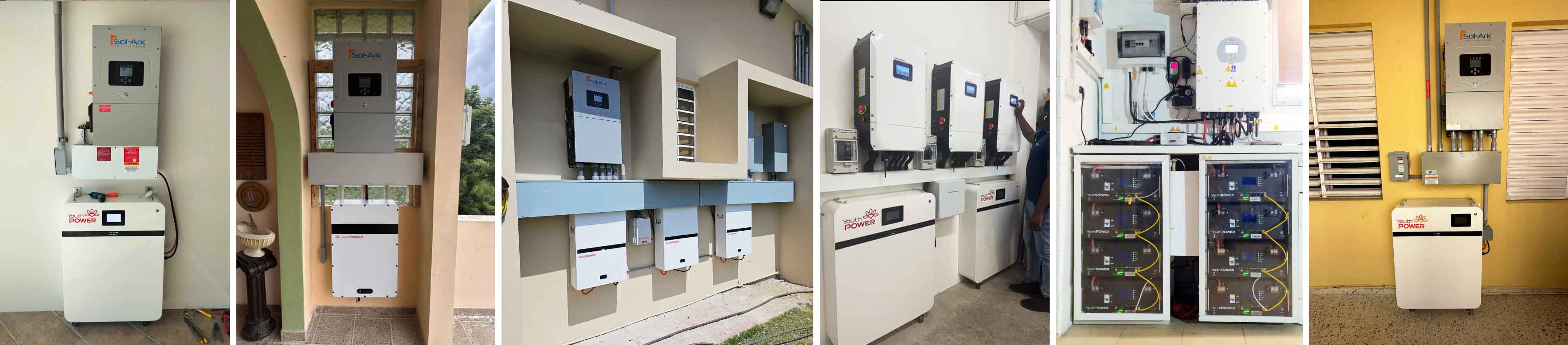
For those considering an off-grid system or looking to add battery backup to an on-grid system, the heart of the solution is a reliable battery bank. This is where YouthPOWER battery solutions excel. Our high-capacity, deep-cycle lithium batteries are engineered for the rigorous demands of off-grid living and backup power, offering exceptional longevity, faster charging, and maintenance-free operation to ensure your energy security when you need it most.
7. FAQs (Frequently Asked Questions)
Q1: What is the main difference between on-grid and off-grid solar systems?
A1: The main difference between on grid and off grid solar storage system is connection to the public utility grid. On-grid systems are connected, while off-grid systems are self-sufficient and include battery storage.
Q2: Can an on-grid system work during a power outage?
A2: Standard on grid solar systems automatically shut down during a blackout for the safety of utility workers. You can add a battery backup (like a YouthPOWER solution) to your on-grid system to provide power during outages.
Q3: Are off-grid solar systems more expensive?
A3: Yes, off grid solar power systems have a much higher upfront cost due to the necessity of a large solar battery energy storage, a charge controller, and often a backup generator.
Q4: What does "off the grid" mean?
A4: Living "off the grid" means your home is not connected to any public utilities (electric, water, gas). An off the grid solar system is what provides all your electrical power.
Q5: Can I switch from an on-grid to an off-grid system later?
A5: It is possible but can be complex and expensive, as it requires adding a large battery bank, a charge controller, and potentially reconfiguring your entire system. It's best to decide your goals before installation.
Ultimately, the best system is the one that aligns with your location, budget, and energy goals. For most, the solar on grid system is the logical choice, while the solar off grid system serves a critical niche for those seeking total independence.
Ready to Power Your Projects with Reliable Solar Energy Solutions?
As a industry-leading battery provider, YouthPOWER empowers businesses and installers with robust energy storage solutions for both on-grid and off-grid applications. Let's discuss how our batteries can enhance your solar projects' efficiency and profitability. Contact our team today for a professional consultation.
Email: sales@youth-power.net
Post time: Sep-23-2025